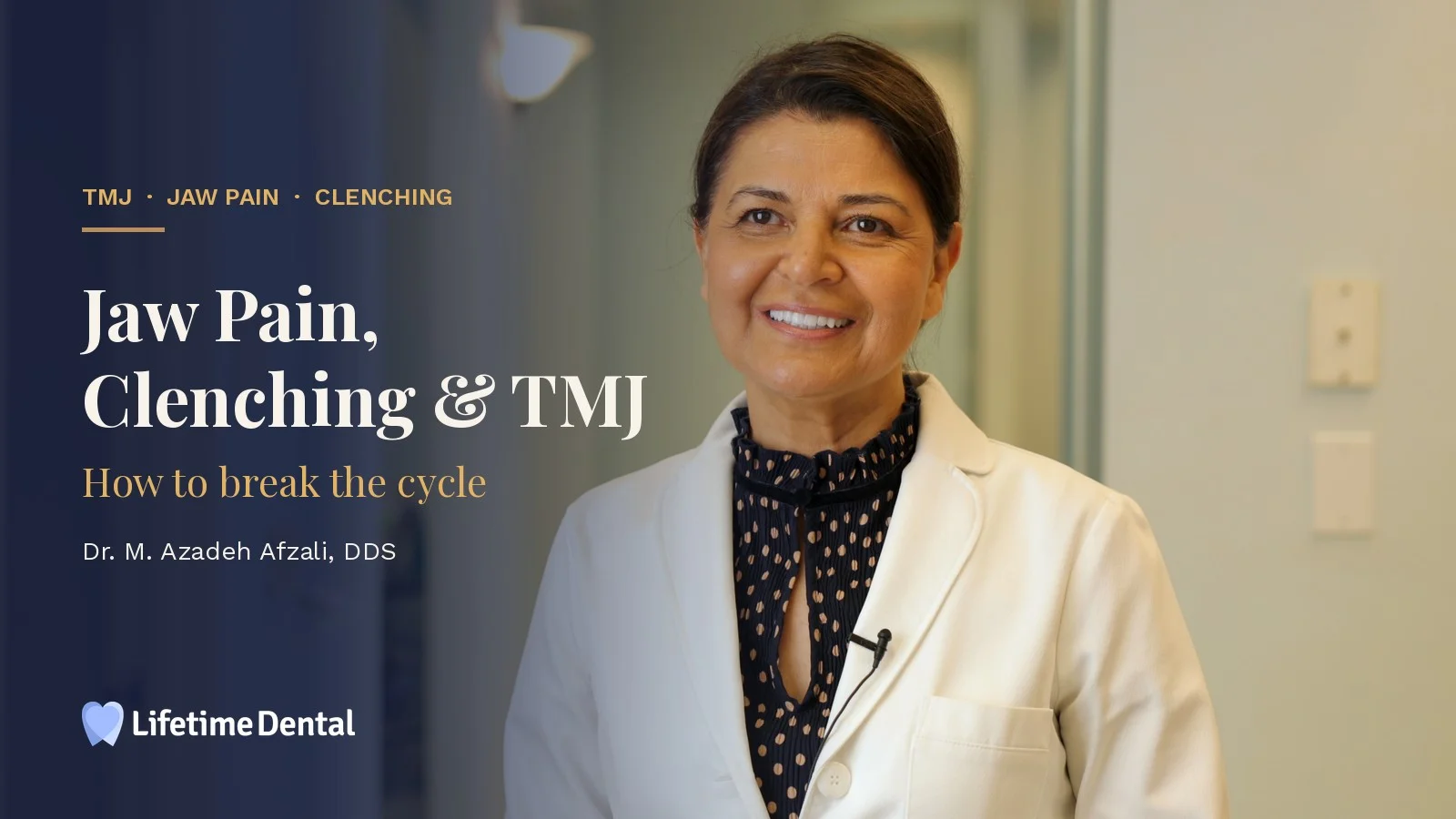
Jaw Pain, Clenching and TMJ: How to Break the Cycle
Do you wake up with a sore jaw, tight cheeks or a dull headache at your temples? Maybe you catch yourself clenching in traffic or at your desk. You are not alone, and you don’t have to just live with it.
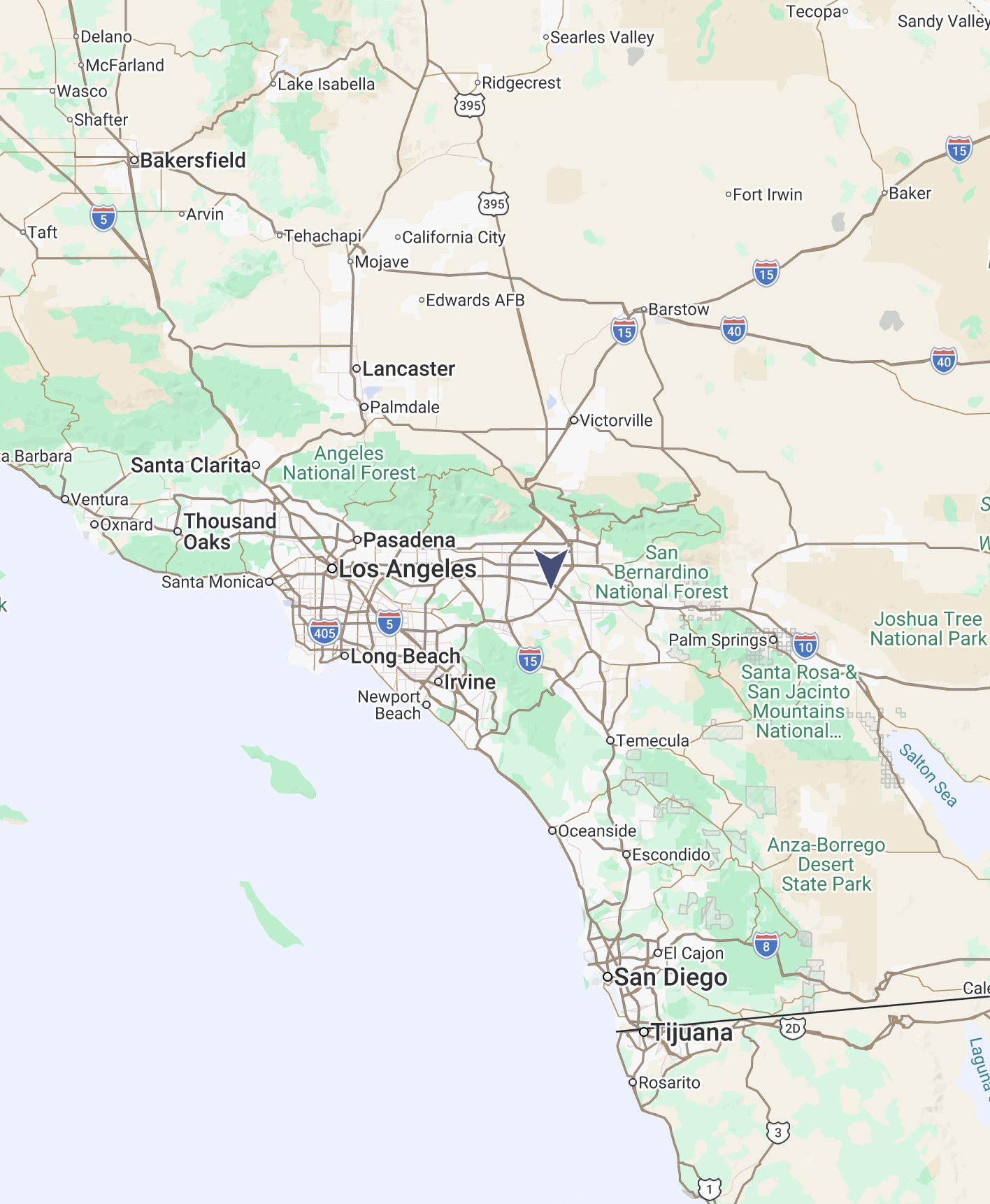
Jaw comfort is personal for our team. Early in her career, Dr. Afzali trained extensively in temporomandibular joint disorders, partly to help herself. Today, TMJ care is a big part of what we do across the Inland Empire. Here is what we want every patient to know.
What Is TMJ?
Your temporomandibular joints, or TMJ, are the two hinges just in front of your ears that connect your lower jaw to your skull. When the joints, or the muscles that move them, become strained, we call it a TMJ disorder.
TMJ problems are usually multi-factorial. Stress is a major contributing factor, but rarely the only one. An uneven bite, grinding you may not notice, sleeping position, tongue posture and your airway [https://lifetimedentalriverside.com/service/sleep-breathing-disorders/] can all play a part. That’s why we look at the whole patient, not just the sore spot.
Common Signs of TMJ Trouble
- Jaw pain, soreness or tightness, especially in the morning
- Clicking, popping or grinding sounds when you open or close
- Headaches at the temples, or neck and shoulder tension
- Clenching or grinding, day or night
- Worn, chipped, cracked or sensitive teeth
Clicking is not just a sound. It’s a warning sign of an imbalanced bite, muscle tension or a joint that isn’t sitting where it should. Don’t ignore it. Find out what is causing it.
The Clench Cycle: Why Your Jaw Remembers Stress
Clenching often starts small: a tense moment, a busy day, a long night. When you live with stress for a long time, your body records it, and your jaw keeps going back to that habit, even when you’re not thinking about it.
“The more you clench, the more your jaw memorizes the habit. You want to break that cycle.” — Dr. M. Azadeh Afzali
The cycle feeds itself. Stress leads to clenching, clenching tires the muscles and loads the joints, and that brings more soreness and tension. Over time, grinding can wear teeth down and shorten the bite, leaving less room for your tongue.
What Helps With Jaw Pain and Clenching
The good news: there is a lot we can do, and most of it is gentle.
At home:
- Check in with your jaw during the day. At rest, aim for lips together, teeth apart, tongue resting on the roof of your mouth.
- During a flare-up, choose softer foods and skip gum.
- Build in small stress resets, like a short walk or slow nose breathing.
In our office:
- Protect your teeth. A custom night guard is a barrier that keeps your teeth from touching. It’s important protection, but it doesn’t change the habit. Once it’s out, your teeth go right back to where they were.
- Find the root cause. A proper diagnosis comes before any treatment. Our TMJ evaluation [https://lifetimedentalriverside.com/service/tmj-treatment/] looks at your joints, bite, muscles, tongue posture and airway. We don’t want to band-aid the problem. We want to help solve it.
- Retrain the muscles. Myofunctional exercises help your tongue work in its correct position and give the TMJ more support.
- Correct the bite when it’s contributing. VitalOrtho™ [https://lifetimedentalriverside.com/service/vitalortho/], Dr. Afzali’s holistic, non-surgical, non-extraction orthodontic approach, can help bring the teeth and jaws into a more harmonious relationship. That may include Fastbraces® or ClearCorrect [https://lifetimedentalriverside.com/service/clearcorrect/] aligners.
Braces aren’t magic. What we do is align and correct the bite so your teeth can form a new relationship with each other. Every patient is different, and results vary.
When to See a Dentist About Jaw Pain
- Jaw pain or headaches last more than a week or two, or keep coming back
- Clicking comes with pain or is getting worse
- Your jaw catches, or you can’t open or close it fully
- You wear a night guard but still wake up sore
If your jaw locks open or closed, or pain comes with swelling or fever, call a dentist right away.
TMJ Treatment in the Inland Empire: FAQs
Is TMJ pain caused by stress?
Stress is a major factor, but TMJ problems usually have several causes, including bite, grinding, muscle tension and airway. A thorough evaluation sorts them out.
Will a night guard stop my clenching?
A night guard is a great way to protect your teeth while you sleep, but it doesn’t teach your jaw to let go. It often works best alongside bite care and muscle exercises.
Do I need surgery for TMJ?
Most TMJ problems can be managed conservatively first. Our approach is very gentle and holistic. As Dr. Afzali puts it, “In my opinion, many surgeries can be avoided, though some probably can’t.” When a specialist’s opinion is needed, we’ll refer you.
Can children have jaw and bite problems too?
Yes. That’s one reason we love seeing children early, before they ever have a cavity. With HealthyStart® [https://lifetimedentalriverside.com/service/healthystart/], we can help guide healthy jaw and airway development while they are still growing.
Let’s Break the Cycle Together
If your jaw has been feeling tight, sore or tired, we would love to help. Reach out to schedule a TMJ evaluation.
This article is general education, not a substitute for a personal dental exam. Results vary.